Bhakhlava Cheesecake is a decadent dessert that blends the flaky, nutty sweetness of baklava with the creamy richness of cheesecake. Layers of golden phyllo, spiced nuts, and smooth cheesecake create a dessert that is both crunchy and silky. Drizzled with honey syrup, it’s a treat for both the eyes and taste buds.
The combination of crisp phyllo, crunchy nuts, and creamy filling makes each bite a delightful experience. Variations like pistachio, chocolate, or no-bake versions make it versatile for every palate.
Making Bhakhlava Cheesecake is a rewarding experience. Layering the phyllo, spreading the cheesecake filling, and drizzling with syrup creates a beautiful and indulgent dessert. Ideal for holidays, celebrations, or a cozy weekend treat, it’s as impressive to serve as it is delicious.
So what is a Baklava Cheesecake?
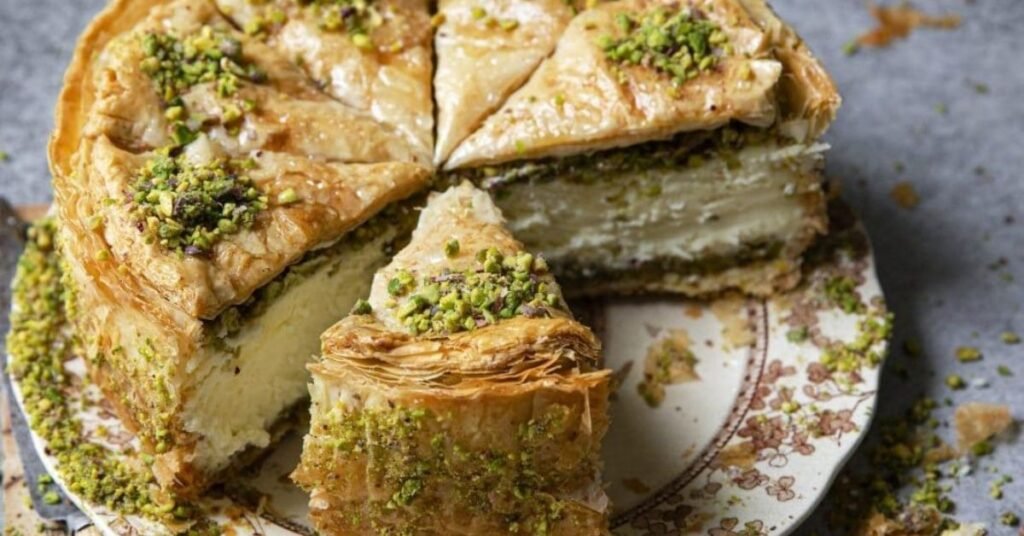
Baklava Cheesecake combines the flaky, nutty goodness of classic baklava with the creamy richness of cheesecake. It brings together layers of crisp phyllo, spiced nuts, and velvety filling for a perfectly balanced bite. Every slice is a blend of crunchy textures and smooth creaminess. Sweet, aromatic, and indulgent, this dessert delivers a unique flavor experience.
- Origins: Baklava (Middle East) + Cheesecake (Greece).
- Appeal: texture harmony, rich flavor, versatility, and visual appeal.
Variations: pistachio, chocolate, no-bake, gluten-free.
Origin and Inspiration
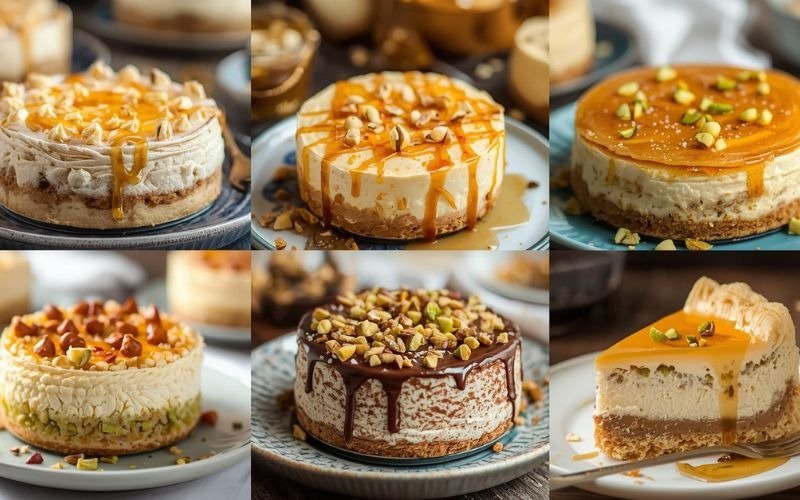
The true origin of Baklava Cheesecake is rooted in modern culinary fusion rather than ancient tradition, emerging as chefs began blending Middle Eastern and Western desserts in the late 20th century. While baklava dates back centuries to the Ottoman Empire, the idea of pairing its flaky, nutty layers with creamy cheesecake began appearing in creative bakery menus and food magazines during the 1980s and early 1990s. By the early 2000s, this fusion dessert gained popularity in Greek, Turkish, and Middle Eastern bakeries across the United States and Europe, where chefs experimented with phyllo crusts, honey syrups, and pistachio toppings. Around 2010–2015, food bloggers and TV cooking shows further elevated its visibility, presenting it as a festive, cross-cultural dessert perfect for holidays and celebrations. Today, Baklava Cheesecake continues to evolve with variations such as pistachio, chocolate, no-bake, gluten-free, and mini versions, making it a global favorite that celebrates both tradition and modern innovation.
Why You’ll Love it
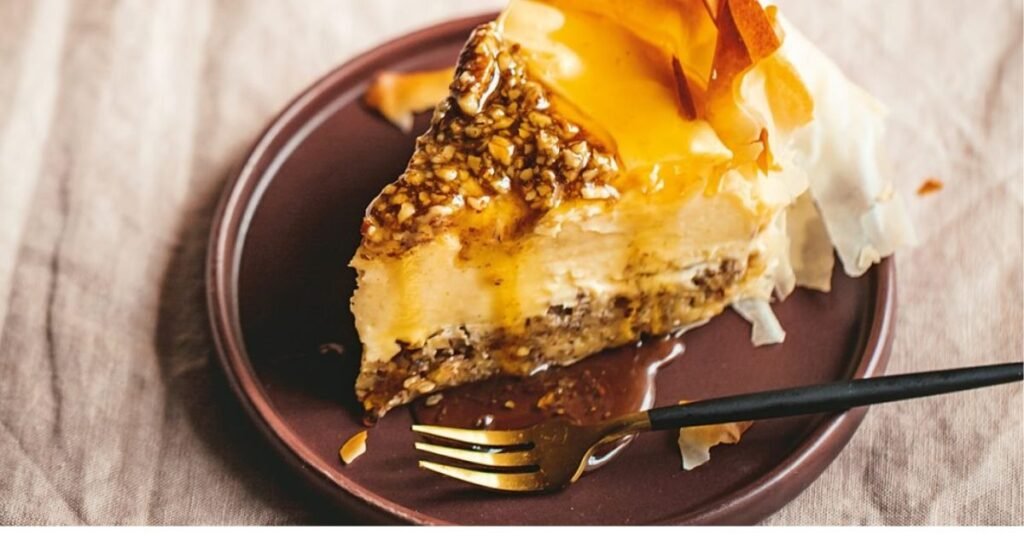
The beauty of this dessert lies in its texture harmony, where crispy phyllo layers meet a smooth and creamy cheesecake filling. Its flavor depth comes from warm spices like cinnamon and nutmeg, enhanced by a touch of lemon zest that complements the sweet honey and nut layers. This recipe is wonderfully versatile, allowing you to prepare it baked, chilled, or even in convenient mini versions. With its golden, layered phyllo and glossy syrup finish, it stands out as a truly showstopping dessert.
Types
Baklava Cheesecake comes in a variety of types and styles, each catering to different tastes, dietary preferences, and occasions. Understanding the types can help you choose the perfect version for your kitchen or event.
Popular Types of Baklava Cheesecake
- Classic Phyllo Baklava Cheesecake
Combines layers of phyllo pastry, cinnamon-spiced nuts, and creamy cheesecake filling. This is the most authentic traditional baklava recipe fusion. - Mini Baklava Cheesecake
Individual-sized portions, ideal for parties or gifting. Often baked in muffin tins and drizzled with honey syrup. Perfect for the best mini baklava cheesecake recipe. - No-Bake Baklava Cheesecake
A simple, fridge-set version. Uses a pre-baked phyllo or cookie crust with a chilled cheesecake filling. Popular among beginners seeking an easy baklava cheesecake recipe, no bake. - Chocolate Baklava Cheesecake
A decadent variation where cocoa or melted chocolate is incorporated into the cheesecake filling. Known as chocolate baklava cheesecake recipe.
- Gluten-Free Baklava Cheesecake
Uses gluten-free phyllo sheets or nut-based crusts. Suitable for those with dietary restrictions, also known as gluten free baklava cheesecake recipe. - Honey Pistachio Baklava Cheesecake
Focuses on the signature Middle Eastern flavor pairing of honey and pistachios. Also referenced as honey pistachio baklava cheesecake recipe. - Regional Variations
- Greek Baklava Cheesecake – Uses walnuts and a slightly tangier cheesecake.
- Turkish Baklava Cheesecake – More honey syrup and often includes rosewater or orange zest.
- Greek Baklava Cheesecake – Uses walnuts and a slightly tangier cheesecake.
Tip: You can mix and match styles for personal preferences, like adding chocolate to a mini baklava cheesecake or using pistachios in a no-bake version.
This section helps you understand the type before moving on to ingredients, preparation, or dietary adaptations.
Ingredients
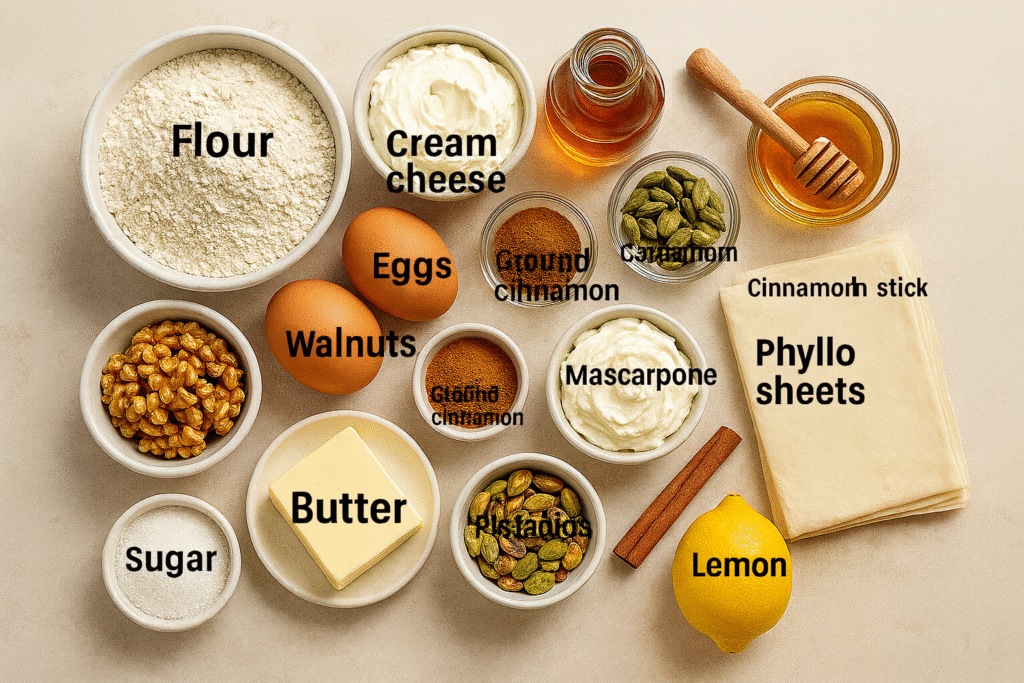
The Baklava Cheesecake uses three main components that come together to create its rich flavor and layered texture. The cheesecake filling is made with cream cheese, sugar, eggs, yogurt, vanilla, lemon zest, a touch of cinnamon, and a small amount of flour for stability. For the phyllo and nut layers, you’ll need delicate phyllo sheets brushed with butter and filled with chopped nuts, cinnamon, and a bit of optional sugar. Finally, the cinnamon-honey syrup is prepared using honey, sugar, water, a cinnamon stick, lemon juice, and optional orange zest, adding a warm, fragrant sweetness that ties the entire dessert together beautifully.
Cinnamon–Honey Drenching Syrup
| Ingredient | US Customary | Metric |
| Honey | ½ cup | 170 g |
| Water | ½ cup | 120 ml |
| Granulated sugar | ¼ cup | 50 g |
| Cinnamon stick | 1 | 1 |
| Lemon juice | 1 tbsp | 15 ml |
| Orange zest (optional) | 1 tsp | 2–3 g |
Cheesecake Filling
| Ingredient | US Customary | Metric |
|---|---|---|
| Cream cheese (softened) | 24 oz | 680 g |
| Greek yogurt or sour cream | 1 cup | 240 g |
| Granulated sugar | ¾ cup | 150 g |
| Eggs | 3 large | 3 large |
| Vanilla extract | 2 tsp | 10 ml |
| Lemon zest | 1 tsp | 2–3 g |
| Ground cinnamon | ½ tsp | 1 g |
| All-purpose flour or cornstarch | 2 tbsp | 15 g |
Phyllo Nut Layers (Baklava Component)
| Ingredient | US Customary | Metric |
| Phyllo dough sheets | 12–14 sheets | 12–14 sheets |
| Unsalted butter (melted) | ½ cup | 115 g |
| Pistachios or walnuts (finely chopped) | 1½ cups | 200 g |
| Ground cinnamon | 1 tsp | 2 g |
| Brown sugar (optional) | 2 tbsp | 25 g |
Walnut Topping
| Ingredient | US Customary | Metric |
| Chopped walnuts | 1 cup | 120 g |
| Honey | 2–3 tbsp | 30–45 ml |
| Ground cinnamon | ½ tsp | 1 g |
Tip: Toast walnuts lightly for added crunch and deeper flavor.
Essential Tools
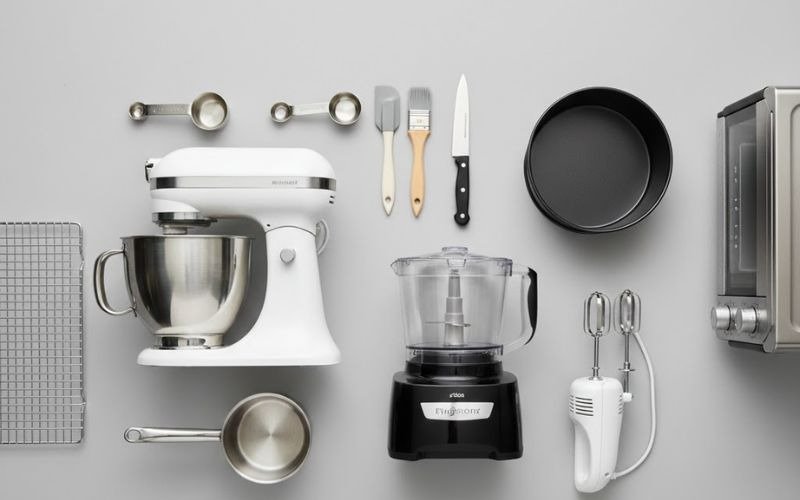
To prepare a perfect Baklava Cheesecake, you’ll need a selection of essential baking tools that make the process smooth and efficient. A stand mixer or hand mixer helps create a creamy, lump-free cheesecake filling, while a food processor finely chops the nuts for the baklava layers. A springform pan or a regular cake pan if needed ensures easy release and clean slicing. You’ll also need a sturdy saucepan for making the honey syrup, a heat-reliable oven for baking, and a flexible spatula for mixing and spreading. A pastry brush is important for coating each phyllo sheet with butter, and a sharp chef’s knife helps in prepping ingredients. Accurate measuring cups and spoons ensure perfect ratios, while a cooling rack allows your cheesecake to set properly without becoming soggy. These tools together create the ideal setup for crafting a flawless dessert.
Recipe for Baklava Cheesecake
The ingredients and instructions come together to guide you through the complete assembly of the Baklava Cheesecake, combining each prepared layer and following the detailed steps listed under the Instructions. Once the cheesecake is fully baked and cooled, it can be elevated with simple yet elegant serving suggestions: garnish the top with crushed nuts, drizzle a generous amount of honey for added sweetness, and serve the dessert thoroughly chilled for the best flavor and texture experience.
Instructions (How to Make Baklava Cheesecake)
- Make the filling
- Make the crust and bake
- Add topping and syrup
- Chill thoroughly
Syrup
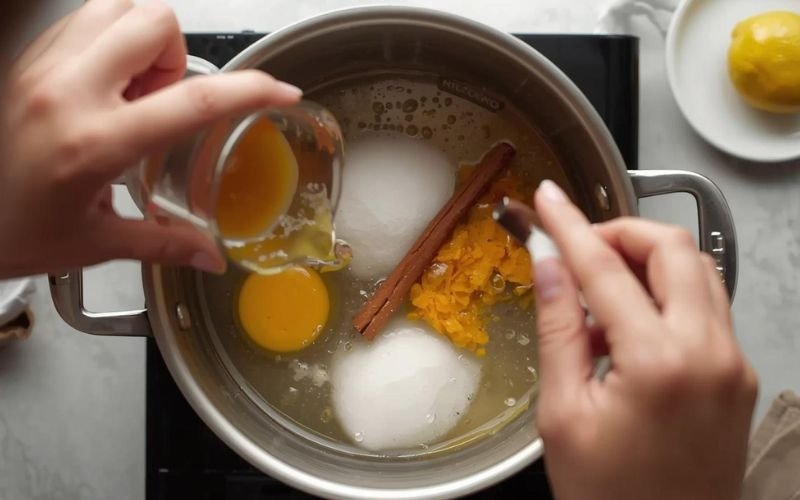
Step 1:Combine honey, water, sugar, cinnamon stick, and lemon juice in a medium saucepan. Add orange zest if desired.
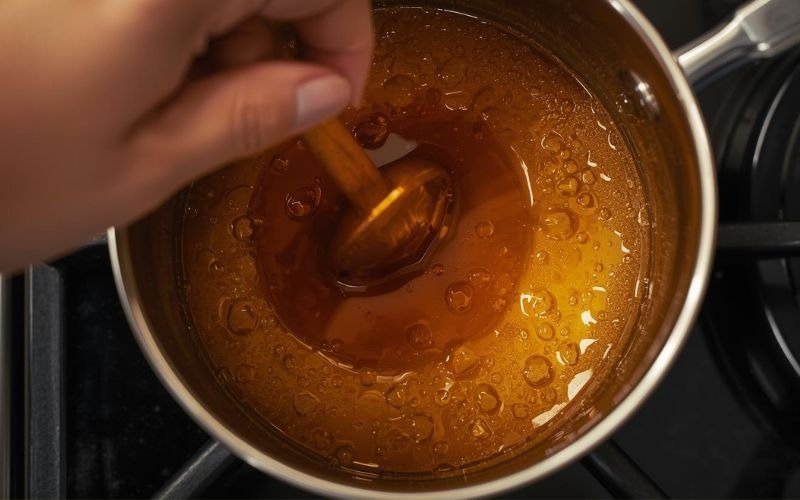
Step 2:Simmer on medium heat for 8–10 minutes until slightly thickened.
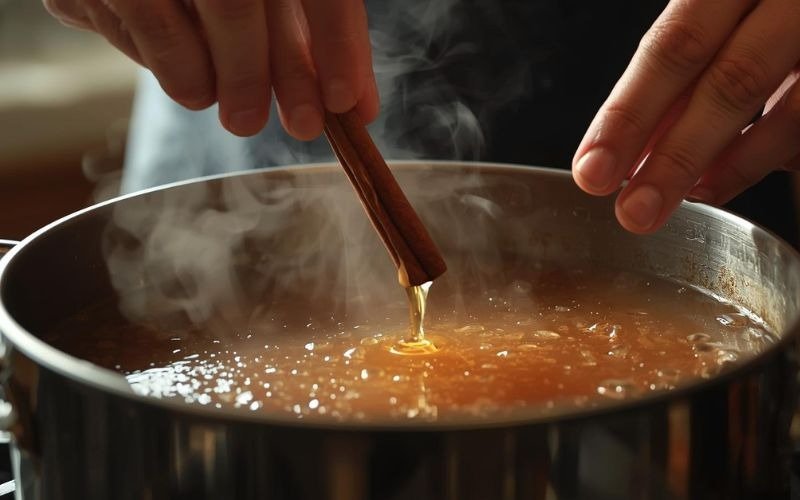
Step 3:Remove cinnamon stick and cool syrup to room temperature.
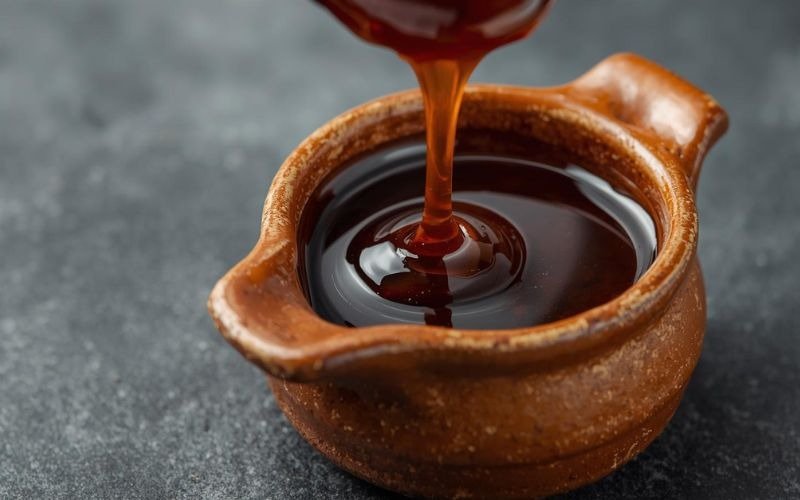
Step 4: Set aside for later use over baked cheesecake.
Baklava Cheesecake
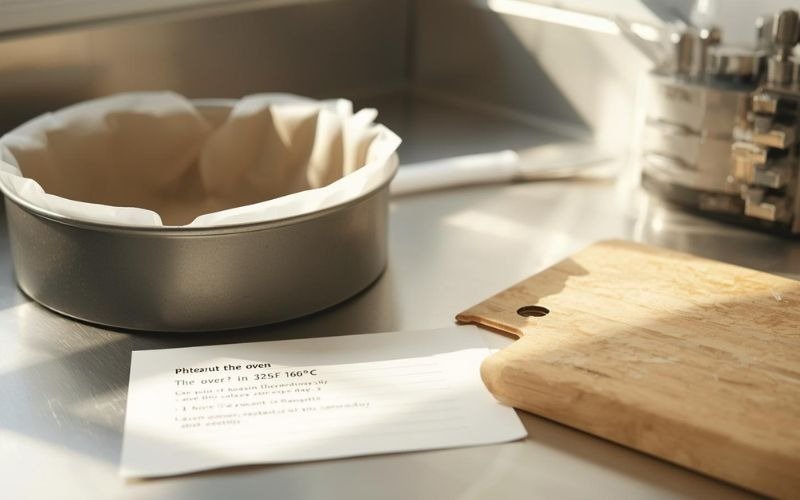
Step 1:Preheat the oven to 325°F (160°C) and line a springform pan with parchment paper.
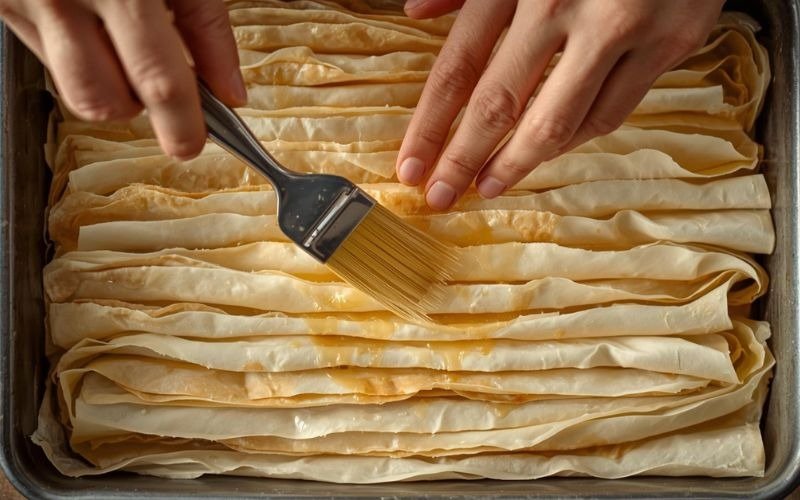
Step 2:Layer 6–7 phyllo sheets in the pan, brushing each with melted butter.
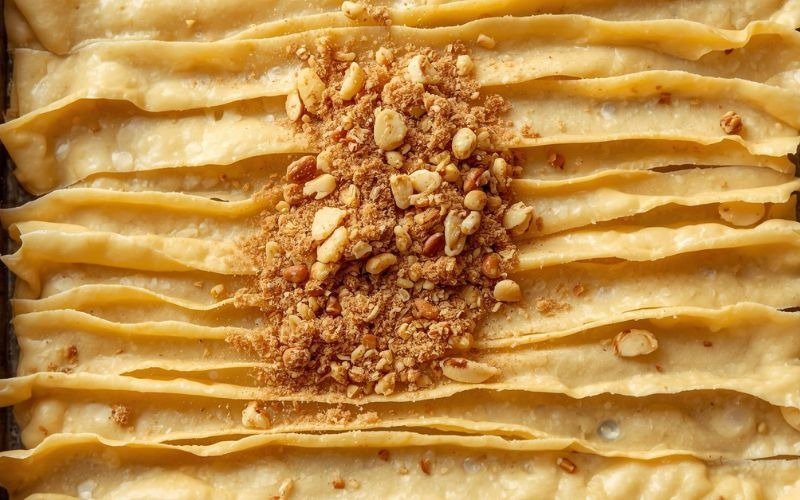
Step 3:Sprinkle half the nut mixture over the phyllo.
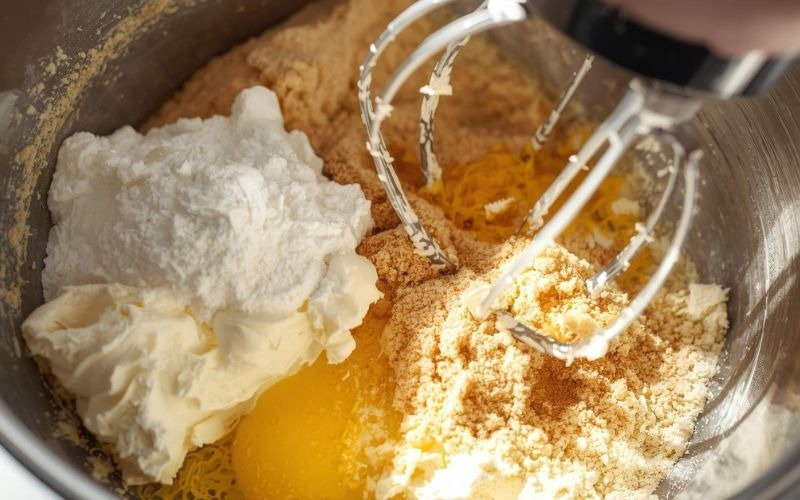
Step 4:Prepare cheesecake filling: beat cream cheese, add sugar, eggs, yogurt, vanilla, lemon zest, cinnamon, and flour.
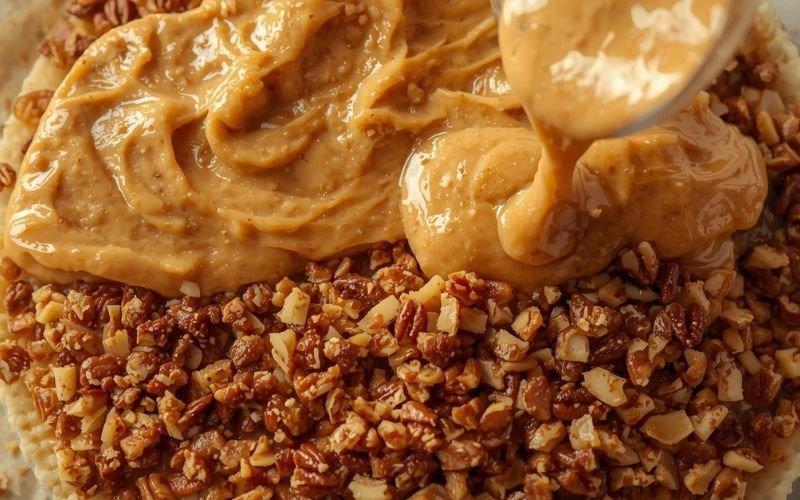
Step 5:Pour half the filling over phyllo and nuts. Add remaining phyllo and nuts if desired. Top with remaining filling.
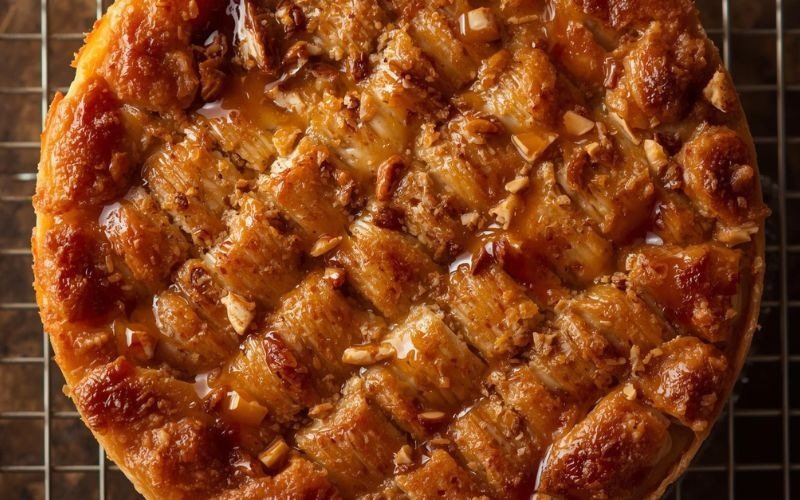
Step 6:Bake 55–65 minutes until the center is set. Cool for 10 minutes.
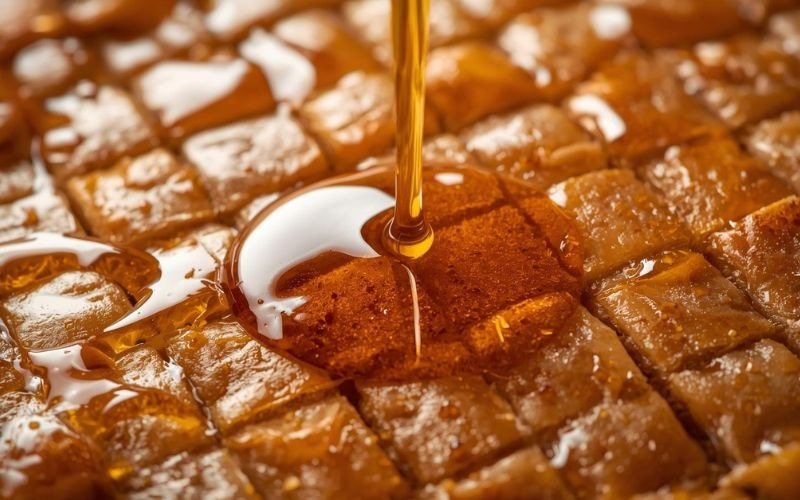
Step 7:Pour cooled cinnamon-honey syrup over warm cheesecake. Chill for at least 6 hours or overnight.
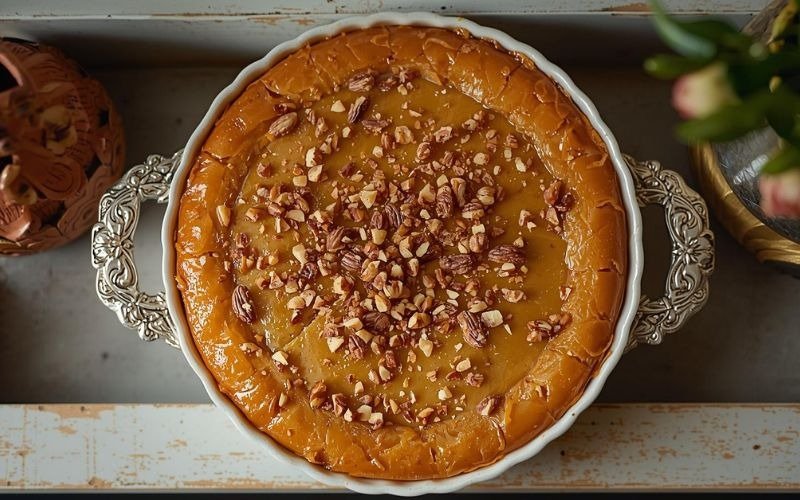
Step 8:Then fully garnish with nuts and serve after chilling.
Tips to Make a Really Creamy Cheesecake
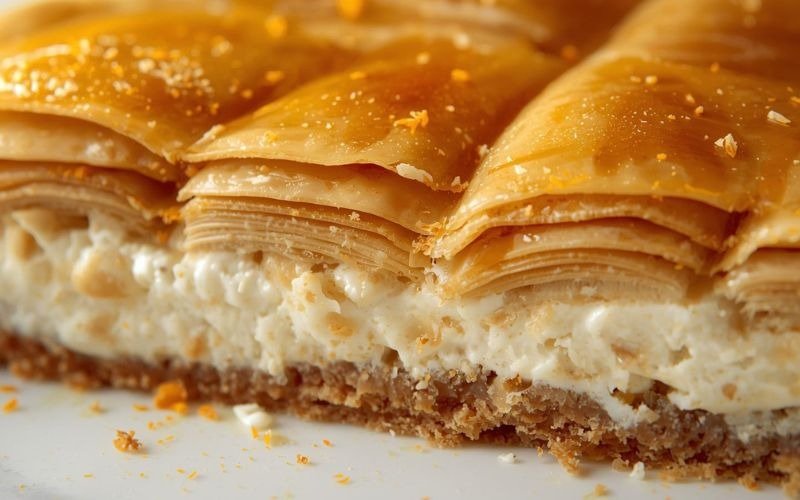
For the best results when making Baklava Cheesecake, start by using room-temperature ingredients to ensure a smooth and creamy filling. Be careful not to overmix, as this can introduce air and cause cracks during baking. A water bath helps the cheesecake bake evenly, while adding a little flour or cornstarch provides extra stability. Always bake at a low temperature and allow the cheesecake to cool gradually before chilling it thoroughly in the refrigerator. When preparing the phyllo layers, brush each sheet evenly with butter for perfect crispness. For added flavor, you can include optional touches like rosewater, orange zest, or extra cinnamon to elevate the aroma and taste.
Finishing and Storage Guidelines
- Use room-temperature ingredients for smooth texture.
- Keep phyllo sheets covered to prevent drying.
- Avoid overmixing cheesecake batter.
- Optional: bake with a water bath for creamy texture.
- Chilling overnight improves flavor and texture.
- Garnish with nuts, cinnamon, or extra syrup.
- Storage: refrigerate 4–5 days, freeze slices up to 2 months.
Dietary
Baklava Cheesecake is a rich dessert that can be adapted to suit various dietary preferences without compromising flavor. Understanding dietary considerations allows you to enjoy this indulgent treat while accommodating different needs.
Gluten-Free Options
- Use gluten-free phyllo sheets or a nut-based crust to make a gluten free baklava cheesecake recipe.
- Ensure all other ingredients, like flour or thickeners, are certified gluten-free.
- The flavor remains authentic, with crisp layers and creamy filling intact.
Halal Options
- Choose halal-certified cream cheese and butter to make baklava cheesecake halaal recipes.
- Ensure the honey and other ingredients comply with halal standards.
- No adjustments are needed for traditional flavor profiles.
Low-Sugar or Diabetic-Friendly Options
- Substitute sugar with natural sweeteners like stevia or erythritol.
- Use light honey or reduced-sugar syrup for a slightly less sweet dessert.
Vegan or Dairy-Free Adaptations
- Use vegan cream cheese or cashew-based cheesecake filling.
- Substitute butter with plant-based margarine or coconut oil.
- Note: Phyllo dough may contain butter, so check labels carefully.
Other Considerations
- Nuts can be substituted for allergies (e.g., use seeds instead of pistachios or walnuts).
- Mini versions are ideal for portion control.
Tip: Many bakers create regional variations while respecting dietary restrictions, such as Greek baklava recipe UK or Turkish baklava cheesecake recipe using nuts, honey, and phyllo.
With these adaptations, everyone can enjoy the unique taste and texture of this Bhakhlava cheesecake recipe.
Tips for Achieving the Best Cheesecake
- Use room-temperature ingredients.
For the smoothest cheesecake filling, make sure your cream cheese, eggs, and yogurt are at room temperature. This prevents lumps and creates the velvety texture expected from the best Bhakhlava cheesecake recipe variations. - Handle phyllo gently.
Phyllo dries quickly. Keep the sheets covered with a slightly damp towel while working. This helps in achieving bakery-style crispiness without tearing. - Do not overmix the cheesecake batter.
Overmixing adds excess air, which can cause cracks while baking. Mix only until ingredients are combined. - Use a water bath for an extra creamy finish (optional).
If you want a restaurant-quality, ultra-smooth cheesecake, bake it with a water bath. This prevents the top from browning and reduces the risk of cracks. - Let the syrup cool before using.
Pouring cold syrup over a warm cheesecake ensures proper absorption and gives the classic sweetness found in a traditional baklava recipe. - Chill overnight for the best texture.
Most cheesecake recipes including the famous baklava cheesecake recipe UK and Turkish versions recommend chilling overnight. This allows the flavors to deepen and the texture to fully set. - Customize the nuts.
Pistachios give a classic Middle Eastern touch, while walnuts resemble Greek baklava flavors. You can also combine both for richer taste. - For gluten-free baklava cheesecake
Use gluten-free phyllo sheets (widely available in specialty stores) and ensure all other ingredients are certified gluten-free. - Mini versions work perfectly.
This recipe can be baked in muffin trays for the best mini baklava cheesecake recipe. Just reduce bake time to 18–22 minutes. - No-bake variation:
For an easy baklava cheesecake recipe no bake, use a phyllo-walnut butter crust baked separately, then top with chilled no-bake cheesecake filling. - Storage tip:
Baklava cheesecake stays fresh for 4–5 days when refrigerated in an airtight container. For longer storage, freeze slices for up to 2 months.
Final Thoughts
Bhakhlava Cheesecake is a true fusion masterpiece, combining the crisp layers of phyllo with a smooth, velvety cheesecake filling and fragrant honey syrup. With its rich texture and beautiful presentation, it stands out as a dessert worthy of any celebration. For the best results, chill it overnight and finish with a generous drizzle of honey and a sprinkle of crushed nuts. This dessert not only tastes incredible but also makes an impressive centerpiece for any table.
FAQs (Frequently Asked Questions)
1. Can I use a regular biscuit or cookie crust instead of phyllo?
Yes, you can use graham cracker or digestive biscuit crust. However, phyllo provides the signature crisp texture that makes this recipe unique.
2. How long does Baklava Cheesecake need to set?
At least 6 hours, but chilling overnight gives the best flavor and texture.
3. Can Baklava Cheesecake be frozen?
Absolutely. Freeze individual slices for up to 2 months. Thaw in the refrigerator before serving.
4. How do I make a gluten-free version?
Use gluten-free phyllo sheets and ensure all other ingredients like flour or thickeners are certified gluten-free.
5. Is a no-bake version possible?
Yes! You can bake the phyllo crust separately and top it with a chilled, no-bake cheesecake filling.