Have you ever bitten into a homemade cake only to find it dry, dense, and disappointing? You followed the recipe perfectly, but somehow it just didn’t turn out right.
Here’s the truth: the problem isn’t you. It’s your ingredient list.
After ten years of baking and testing hundreds of cake recipes, I’ve discovered the one ingredient that transforms ordinary cakes into extraordinary ones. That ingredient is buttermilk.
Buttermilk Cake Recipe is a foundational recipe that delivers an incredibly tender, moist buttermilk cake every single time no guesswork required.
But what makes buttermilk the secret weapon? The science is beautifully simple and incredibly effective.
Buttermilk’s natural acidity (from lactic acid) does two remarkable things simultaneously. First, it reacts with baking soda to create tiny air pockets that give your cake lift and a cloud-like texture. Second, that same acidity weakens the gluten strands in your flour, preventing the tough, chewy texture that ruins so many homemade cakes.
The result? A supremely tender crumb that practically melts on your tongue and stays moist for days.
Beyond the science, buttermilk adds a subtle tang that perfectly balances sweetness. It enhances every flavor without overpowering them, letting the vanilla and butter truly shine.
Whether you’re baking for a birthday celebration or simply craving something homemade and comforting, this recipe delivers consistent, bakery-quality results. No dry layers, no dense texture, no disappointment.
Ready to transform your baking? Let’s create the most tender, flavorful cake you’ve ever made.
Jump to Recipe ↓
Essential Ingredients for Buttermilk Cake
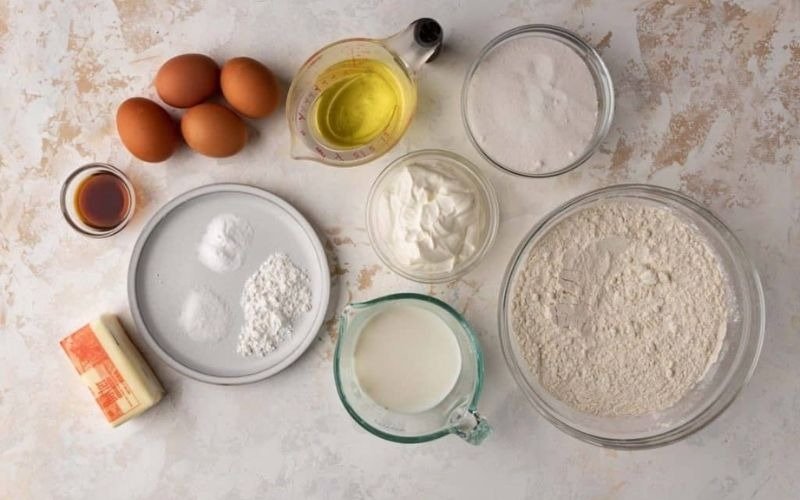
For the Cake:
- 2½ cups (310g) all-purpose flour
- 1¾ cups (350g) granulated sugar
- ¾ cup (170g) unsalted butter, softened
- 1 cup (240ml) buttermilk, room temperature
- 3 large eggs, room temperature
- 2 teaspoons vanilla extract
- 2 teaspoons baking powder
- ½ teaspoon baking soda
- ½ teaspoon salt
The Science of Softness: Why Buttermilk Works
Buttermilk is chemistry at work. The lactic acid (pH around 4.5) weakens gluten proteins before they can toughen your cake.
This acid reacts instantly with baking soda, creating carbon dioxide bubbles. These bubbles expand during baking, giving you light, airy texture impossible to achieve with regular milk.
The slight thickness of buttermilk adds richness without heaviness. It coats flour particles more thoroughly than thin milk, creating a velvety crumb that stays moist for days.
Buttermilk’s subtle tang balances sweetness perfectly. It enhances vanilla and butter flavors while preventing that cloying, overly-sweet taste common in regular cakes.
Pro-Tip: Room-Temperature Ingredients = Perfect Texture
Always use room-temperature ingredients (65-70°F). Cold butter won’t cream properly with sugar, missing crucial air incorporation.
Quick fix if you forgot: Place eggs in warm water for 10 minutes. Cut butter into small cubes and let sit for 20 minutes. This simple step prevents dense, uneven texture.
Emergency Buttermilk Substitute
A buttermilk substitute is made by mixing 1 tablespoon of lemon juice or white vinegar with 1 cup of whole milk. Let it stand for 10 minutes until curdled.
| Ingredient | Amount | Instructions |
| Whole milk | 1 cup | Pour into measuring cup |
| Lemon juice or white vinegar | 1 tablespoon | Add to milk and stir |
| Wait time | 10 minutes | Let sit until thickened and curdled |
Use immediately in your recipe. This homemade version creates the same acidity needed for tender, moist cake.
Step-by-Step Instructions
Preparation
- Preheat the oven to 350°F (175°C). Position rack in the center for even baking.
- Prepare two 9-inch round pans. Grease with butter, line bottoms with parchment paper, then lightly flour the sides.
- Bring ingredients to room temperature. Remove butter, eggs, and buttermilk from the fridge 30-60 minutes before starting.
Making the Batter
- Whisk dry ingredients. Mix the flour, leavening agents, and salt in a bowl; set aside.
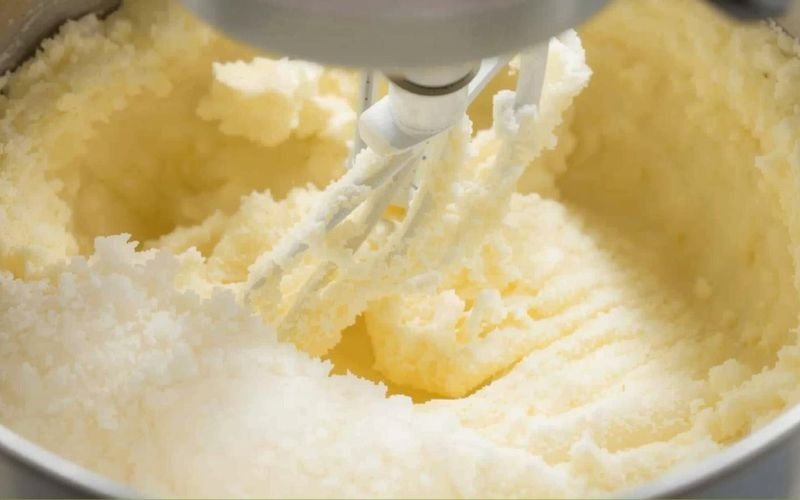
- Add eggs one at a time. Beat well after each addition (about 30 seconds), scraping down the bowl between eggs.
- Mix in vanilla extract. Beat for 10-15 seconds until fully incorporated.
- Cream butter and sugar. Beat on medium-high speed for 3-4 minutes until pale, fluffy, and almost doubled in volume.
- Alternate dry and wet ingredients. On low speed: add ⅓ flour mixture, then ½ buttermilk, then ⅓ flour, remaining buttermilk, and final flour. Mix just until combined after each addition.
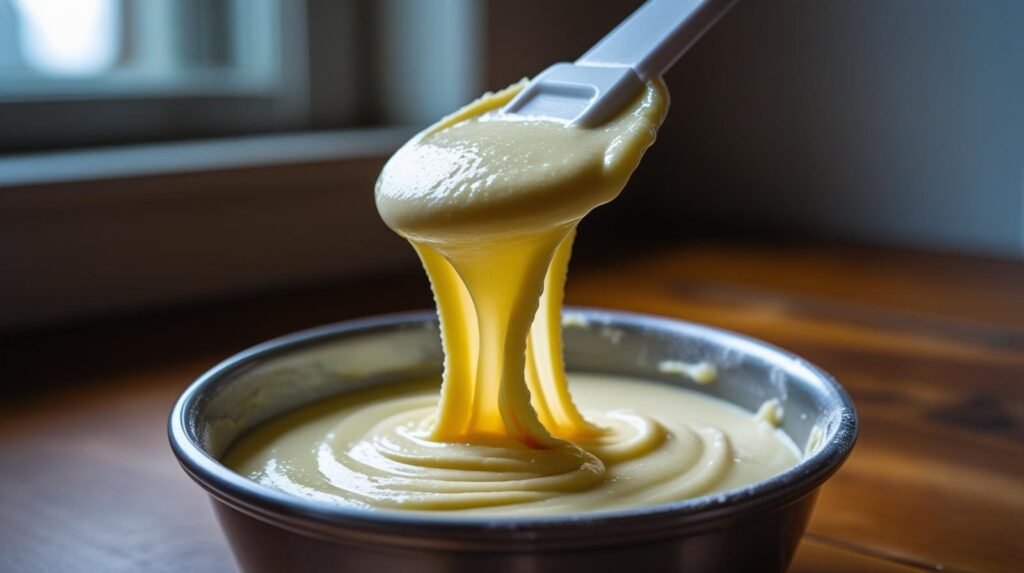
- Finish by hand. Use a spatula to gently fold 3-4 times from the bottom, ensuring everything is incorporated without overmixing.
Baking & Cooling
- Divide batter evenly between pans. Smooth tops with a spatula and tap pans on the counter 2-3 times to release air bubbles.
- Bake for 28-32 minutes. Rotate pans 180° at the 15-minute mark for even browning.
- Test for doneness. Insert a toothpick in the center. Test for doneness by ensuring the center is no longer liquid; it should leave a few moist crumbs on a tester, but no raw batter.
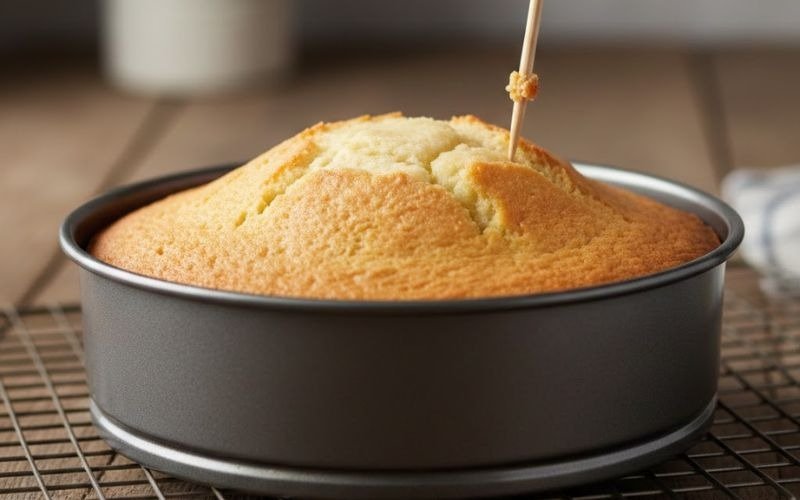
- Cool in pans for 10 minutes. Then turn out onto wire racks, peel off parchment, and cool completely before frosting.
Troubleshooting Guide
| Problem | Cause | Quick Fix |
| Cake sank in the middle | Oven door opened too early | Don’t open before 20 minutes |
| Oven temperature too high | Use oven thermometer to verify 350°F | |
| Too much leavening | Measure baking powder and soda precisely | |
| Underbaked center | Bake until toothpick shows moist crumbs | |
| Dense, heavy texture | Overmixing after adding flour | Stop mixing when flour just disappears |
| Cold ingredients | Use room-temperature butter and eggs | |
| Too much flour | Spoon and level flour (or weigh 310g) | |
| Insufficient creaming | Cream butter and sugar for full 3-4 minutes | |
| Dry cake | Overbaking | Start checking at 28 minutes |
| Too much flour | Measure accurately spoon and level | |
| Toothpick too clean | Remove when a few moist crumbs remain |
Frequently Asked Questions
Can I substitute regular milk for buttermilk?
Direct substitution is not recommended, as the lack of acidity will result in a tougher texture. Instead, create a DIY buttermilk: whisk 1 tablespoon of lemon juice or white vinegar into 1 cup of milk. Let the mixture sit for 10 minutes until slightly curdled before using.
How long does buttermilk cake stay fresh?
When stored in an airtight container, the cake remains moist for 3–4 days at room temperature or up to 5 days in the refrigerator.
Can I freeze buttermilk cake?
Yes. For best results, wrap unfrosted layers tightly in a double layer of plastic wrap and aluminum foil.
What frosting pairs best with buttermilk cake?
The subtle tang and tender crumb of the cake pair exceptionally well with:
- Classic Vanilla Buttercream (for a traditional finish)
- Cream Cheese Frosting (to complement the tanginess)
- Chocolate Ganache (for a rich, decadent contrast)
Variations to Try
Once you’ve mastered this base recipe, try these flavor twists: Lemon Buttermilk Cake (add zest of 2 lemons), Almond Buttermilk Cake (replace 1 tsp vanilla with ½ tsp almond extract), or my upcoming Best Chocolate Buttermilk Cake Recipe featuring Dutch-process cocoa and the blooming technique.
Ready to explore more irresistible dessert recipes? Follow Bitefulbox for tested recipes, expert baking tips, and weekly updates you won’t want to miss!


1 comment
[…] with an Irresistibly Fudgy… The Ultimate Slutty Brownie Recipe: Triple-Layer Perfection The Perfect Buttermilk Cake Recipe for Soft, Bakery-Style… Turkey Avocado Sandwich Recipe Ideas: Classic, Wraps &… Bhakhlava Cheesecake Recipe – […]